
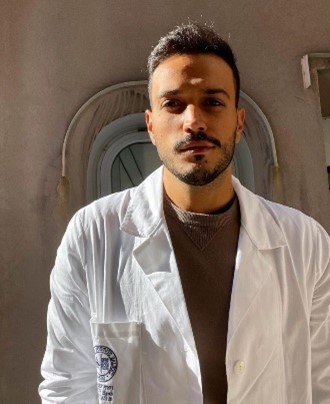
Dr Mario Riolo is currently (October 2025–October 2027) a researcher with a two-year research contract at the Department of Agriculture, Food and Environment (Di3A), University of Catania, in Group 07/AGRI-05 – Plant Pathology and Entomology, SSD AGRI-05/B – Plant Pathology. His work is carried out within the Horizon Europe project “EmergeNow – Emergent plant pest digital services” and focuses on the sustainable management of citrus quarantine pathogens and on the development and application of rapid, portable in-situ diagnostic technologies.
Regarding his education, Dr Riolo obtained a BSc in “Planning and Environmental/Landscape Sustainability” (L-21) in 2016 from Di3A, University of Catania, graduating 110/110 cum laude. In 2018 he earned an MSc in “Environmental Protection of Land and Landscape” (LM-75) from the same Department, again with 110/110 cum laude, with a thesis in Plant Pathology on the population dynamics of Phytophthora species in relation to soil properties and vegetation in the “Villasmundo–S. Alfio Speleological Complex” integral nature reserve. In October 2019 he started a PhD in “Agricultural, Food and Forestry Sciences” (35th cycle) at the Mediterranean University of Reggio Calabria and, in March 2023, he obtained the PhD degree with the additional “Doctor Europaeus” distinction, defending a dissertation in Plant Pathology (AGR/12) entitled “Emerging fungal and oomycete pathogens of olive with a wide host range: characterization, monitoring and management”, graded “Excellent cum laude”.
His research and professional experience has developed continuously since 2017. In 2017–2018 he was involved in teaching support and collaboration activities at Di3A. In early 2019 he was selected for a Short-Term Scientific Mission within COST Action FP1406 PINESTRENGTH at the Escuela Técnica Superior de Ingenierías Agrarias in Palencia (Spain), working on rapid detection of Fusarium circinatum in plant tissues and seeds. He subsequently held a research grant in Plant Pathology at Di3A and, in the same year, a Research Fellowship at the Council for Agricultural Research and Economics (CREA), Research Centre for Olive, Fruit and Citrus Crops (SALVAOLIVI project, 2019–2022), aimed at developing molecular diagnostic protocols for fungal and bacterial pathogens in symptomatic and asymptomatic olive material. Between 2019 and 2022 he also carried out several training and research stays at the Faculty of Pharmacy, University of Valencia, gaining skills in microbiology, mycotoxin and secondary metabolite analysis, and in the selection of Lactobacillus strains as candidate biocontrol agents. In 2022 he completed an Erasmus+ traineeship focused on the development of natural ingredients for the control of olive diseases.
In 2023 Dr Riolo started a research appointment as Research Assistant at the University of Valencia (OCEANIDE project, 2023–2024) at the Food Chemistry and Toxicology Laboratory, working on innovative thermoplastic compounds based on natural polymers. From 2023 to 2025 he then held a postdoctoral research fellowship at Di3A funded by the PRIMA project “BiOrangePack”, working on the development and validation of analytical methods for the detection and quantification of mycotoxins in the citrus supply chain and on lemon peel-based bioformulations fermented with lactic acid bacteria for postharvest disease control. Since 2025 he has been engaged in the EmergeNow project on citrus quarantine pathogens under a two-year research contract at Di3A.
Concerning qualifications and awards, in 2019 Dr Riolo qualified as a Professional Agronomist and Forester. In 2023 he received the Best PhD Thesis Award in sustainable crop protection promoted by the Italian Association for Plant Protection (AIPP) and “Giornate Fitopatologiche”, for the best PhD thesis in sustainable crop protection. In March 2024 he was appointed Subject Expert in Plant Pathology for SSD AGR/12 (AGRI-05/B) at Di3A, University of Catania. In 2025 he was awarded the “Filippo Re” Prize – 6th edition by the National Academy of Agriculture in collaboration with Image Line, for a study on the citrus supply chain in a circular economy perspective, published in Biological Control, based on lemon peel-based bioformulations fermented with selected lactic acid bacteria for the postharvest biological control of citrus fungal rots. In the same year he obtained the Italian National Scientific Qualification (ASN) as Associate Professor (Sector 07/D1 – Plant Pathology and Entomology - 14/03/2025–14/03/2037).
Dr Riolo’s scientific output includes 97 research items. According to Scopus (updated 10 November 2025), 40 of these are articles published in international indexed journals, which have received 50 0citations, corresponding to an h-index of 13; the remaining items comprise outreach publications as well as conference papers and posters.
Dr Riolo serves as Associate Editor for Plant Disease (American Phytopathological Society) and as a member of the Young Editorial Board of the Journal of Plant Pathology. He regularly acts as reviewer for several international indexed journals in the fields of plant pathology, microbiology, agronomy and food sciences. He is a member of the Italian Society of Plant Pathology (SIPaV) and of the Italian Association for Plant Protection (AIPP).
Dr Mario Riolo’s research is in plant pathology and sustainable crop protection, with particular emphasis on fungal and oomycete diseases of olive, citrus and other woody crops, and on innovative diagnostic and biocontrol strategies based on bio-based formulations and microbial consortia.
His main research topics include:
-
diseases of woody crops (especially olive, citrus and pomegranate) caused by fungi and oomycetes and their sustainable management;
-
development and validation of rapid molecular diagnostic protocols (PCR, qPCR, RPA, sensor-based tools) for quarantine and emerging plant pathogens;
-
biocontrol using bio-based formulations from plant by-products and microbial consortia, in both pre- and postharvest contexts;
-
taxonomy and characterization of pathogenic microorganisms on woody crops, with a focus on Colletotrichum, Alternaria and Phytophthora species
-
use of Lactobacillus ferments and other microbial metabolites to extend the shelf life of plant products and foods;
-
mycotoxin and secondary metabolite analysis using advanced chromatography and mass spectrometry techniques (UHPLC-Q-TOF-MS).
Main research and professional experience
-
10/2025–ongoing – Researcher (two-year research contract), Di3A – University of Catania
Horizon Europe project “EmergeNow – Emergent plant pest digital services”. Sustainable management of citrus quarantine pathogens and development/application of rapid, portable molecular and sensor-based diagnostics in the field. Scientific supervisor: Prof. Santa Olga Cacciola. -
10/2023–10/2025 – Postdoctoral Research Fellow (PRIMA “BiOrangePack”), Di3A – University of Catania
Validation of new methods for the detection and quantification of mycotoxins in fresh and processed products of the citrus supply chain and investigation of citrus by-product-based bioformulations fermented with lactic acid bacteria for postharvest disease control. -
01/2023–10/2023 – Research Assistant (OCEANIDE project), University of Valencia, Faculty of Pharmacy
Research on innovative thermoplastic compounds based on natural polymers without chemical modification, processable by conventional plastics transformation technologies. -
10/2019–08/2022 – Research Fellow (SALVAOLIVI project, MIPAAF), CREA – Research Centre for Olive, Fruit and Citrus Crops
Development of molecular diagnostic protocols for the identification and characterization of phytopathogenic bacteria and fungi in symptomatic and asymptomatic olive material. -
01/2019–04/2019 – Research grant in Plant Pathology, Di3A – University of Catania
Study of the distribution of Phytophthora species in natural environments and optimisation of traditional and molecular methods for their monitoring. -
01/2019–02/2019 – Short-Term Scientific Mission, COST Action FP1406 PINESTRENGTH – Escuela Técnica Superior de Ingenierías Agrarias, Palencia (Spain)
Detection of Fusarium circinatum on asymptomatic and symptomatic plant tissues and seeds and development of tools for its rapid detection. -
2019–2022 – Training periods and traineeship at the Faculty of Pharmacy, University of Valencia
Work on biocontrol of major olive pathogens using Lactobacillus spp., development of natural ingredients to control olive diseases, and multi-mycotoxin and metabolite analysis in food and plant matrices by UHPLC-MS/MS and GC-MS/MS. -
2017–2018 – Collaborations and support to teaching and field monitoring activities at Di3A – University of Catania, and field monitoring of GRAS products (DECCO Italia) on horticultural and fruit crops.